How to Reduce Your Freight Carbon Footprint Without Slowing Down Your Supply Chain
CargoClave Insights
Logistics & Trade Analyst
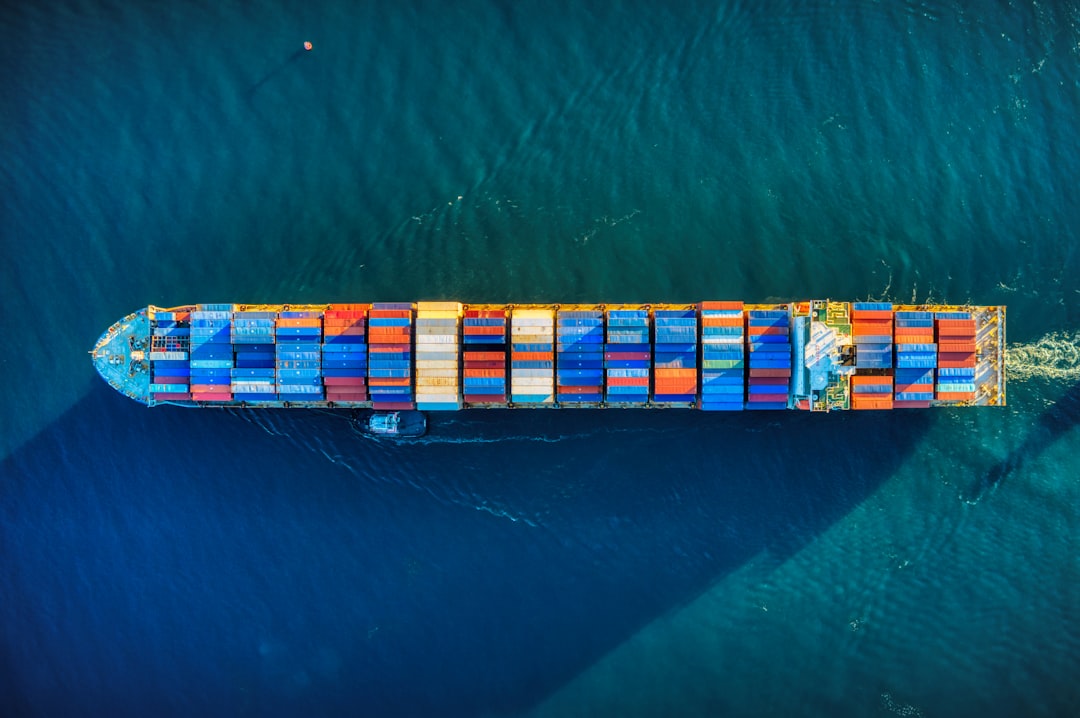
Sustainability in logistics used to be a topic for corporate annual reports. In 2026, it is a topic for procurement conversations. Enterprise clients — particularly multinationals with published net-zero commitments — are asking their logistics providers for carbon emissions data per shipment, and some are beginning to make carrier and route selection decisions based on emissions performance rather than rate alone.
The biggest levers in freight emissions — where the numbers actually are
Ocean freight accounts for approximately 80 to 90 per cent of the carbon footprint of most international supply chains measured in absolute tonnes of CO2 equivalent. Air freight, while it carries a small fraction of the volume, emits roughly 47 times more CO2 per tonne-kilometre than ocean freight. Road freight falls between the two. This means the most impactful carbon decisions in logistics are modal — whether something goes by air or ocean, and whether a shipment can wait for a slower but lower-emission routing.
Within ocean freight, the biggest emissions variable is vessel age and speed. A slow-steaming modern vessel on a direct route emits materially less per tonne-kilometre than a fast, older vessel with transshipment. Some carriers — notably Maersk, which has committed to net-zero by 2040 — are deploying methanol-powered vessels on certain lanes. These do carry a small rate premium, but for clients with active Scope 3 emissions reporting obligations, the premium may be justified.
The practical emissions reductions available to freight operators right now
The most accessible emissions reduction for a freight forwarder today is consolidation — moving LCL cargo or groupage shipments rather than FCL containers that are partly empty. A container that is 60 per cent full is generating carbon emissions for 100 per cent of a container booking. Consolidating that cargo with other shippers to fill the container means the emissions are shared across a larger cargo base.
The second lever is modal optimisation — specifically, identifying cargo that is currently moving by air for convenience or legacy reasons, and evaluating whether the transit time difference would actually affect the client's supply chain if moved by ocean or sea-air. Many supply chains have air freight embedded in them for historical reasons that do not reflect the current operational reality. A logistics audit that systematically reviews every air freight lane and asks 'could this be ocean?' often finds 20 to 30 per cent of air spend that could be shifted without meaningful supply chain impact.
How to report emissions data to clients
The GLEC Framework (Global Logistics Emissions Council) is the accepted methodology for freight emissions calculations. It defines how to calculate CO2e per tonne-kilometre for each transport mode, using emissions intensity factors that vary by vessel type, carrier, and route. Most modern freight management platforms can produce GLEC-compliant emissions reports at the shipment level — the freight forwarder who can share this data as part of a regular business review is providing a service that few SME competitors offer.
Key Takeaways
-
The modal decision — air vs. ocean — is the single largest carbon lever in most supply chains. Air emits approximately 47x more CO2 per tonne-kilometre than ocean freight.
-
Consolidation reduces the carbon cost per unit of cargo — a partly-full FCL container generates full-container emissions against a smaller cargo base.
-
GLEC-compliant emissions reporting at the shipment level is a client service differentiator that few SME freight operators currently offer. The data is in your FMS — it just needs to be calculated and presented.
Tags:#GreenLogistics#Sustainability